
Ducted Fume Hood
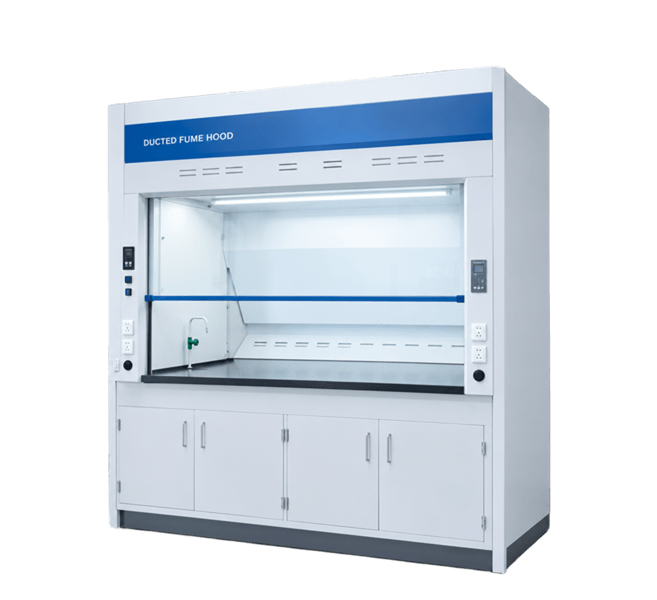
A Ducted Fume Hood is a laboratory ventilation enclosure that captures hazardous vapors, gases, dust, and aerosols at the work surface and discharges them outside the building through dedicated ductwork. It is primarily a personnel-protection device, especially suited to high-volume, volatile, toxic, or odorous chemical work.
Typical face velocity is around 0.4–0.6 m/s, though requirements vary by application and local safety standards.
Key components
-
Chamber and work surface: Often chemical-resistant materials such as epoxy-coated steel, stainless steel, or polypropylene for corrosive work.
-
Sash: Sliding glass front that provides a physical barrier and controls the working opening.advalab+1
-
Baffles and Airfoil: Maintain uniform airflow and reduce escape of contaminants.
-
Exhaust duct and blower: Removes contaminated air from the laboratory; the blower may be supplied separately.
-
Controls: Airflow monitor/alarm, lighting, utility services, and sometimes variable air volume (VAV) controls.
-
Ducted systems are generally preferred when hazardous chemicals are used regularly or in significant quantities because contaminants are removed from the building rather than recirculated.