
Fume Hood Chamber
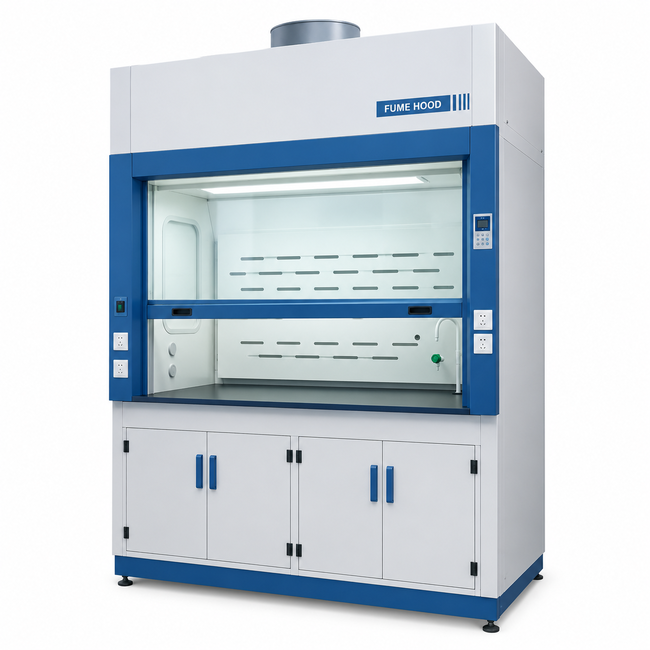
A Fume Hood Chamber is the enclosed working compartment of a laboratory fume hood (also called a fume cupboard or fume chamber). It captures hazardous vapours, gases, mists, and particulates at the work surface and exhausts them away from the operator’s breathing zone.
What Fume Hood Chamber is
The chamber is the internal space where chemical work is performed. It is enclosed on the sides, back, top, and base, with a movable transparent sash at the front; airflow is drawn through the opening and removed through ductwork or filtration.
“Fume chamber” can mean either the interior working space of a fume hood or, in common Indian laboratory usage, the complete fume hood unit itself.
Main components
-
Chamber/working area: Acid- and chemical-resistant interior, often melamine board, stainless steel, or coated steel.
-
Sash: Toughened glass sliding panel that controls the opening and helps maintain containment.
-
Exhaust/blower system: Draws contaminated air out through a duct or, in ductless models, through filters.
-
Work surface: Chemical-resistant bench, commonly phenolic resin, granite, or stainless steel.
-
Services: Water tap, gas/air tap, sink, electrical sockets, lighting, and sometimes a UV lamp.
-
Base storage cabinet: Often included below the work surface for chemical or equipment storage.