
Recirculating Fume Hood
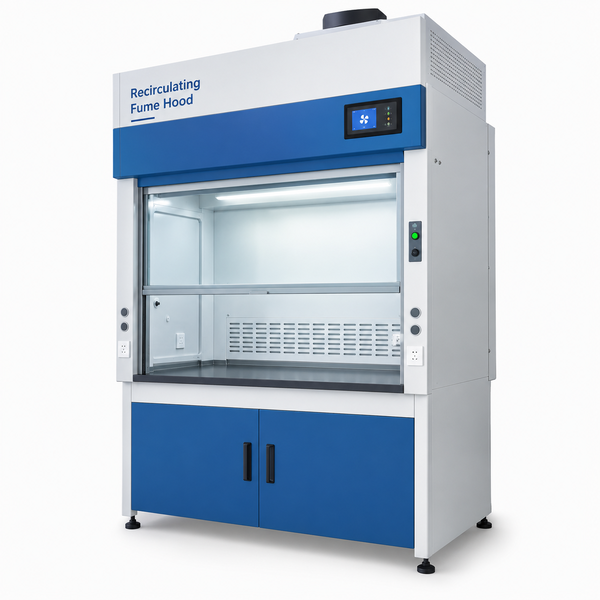
A Recirculating Fume Hood—also called a ductless fume hood—is a self-contained ventilated enclosure that pulls contaminated air through filters and returns the cleaned air to the laboratory, rather than ducting it outside.
How Recirculating Fume Hood works
-
Air is drawn in through the front sash opening.
-
A pre-filter captures larger dust and particulates.
-
The main filter—typically activated carbon for vapours/gases and/or HEPA for particles—removes the targeted contaminants.
- A fan returns the filtered air to the room.
-
Best-fit applications
Recirculating hoods are generally suitable for low-volume, low-toxicity work where the exact chemical exposure is known and matched to the filter type—for example:
-
Weighing or dispensing small quantities of powders.
-
Light solvent handling with appropriate carbon filtration.
-
Pharmaceutical, cosmetic, or analytical sample preparation.
-
Educational and small QC laboratories
-
Applications where ducting is impractical.
-