
Biosafety in Microbiology
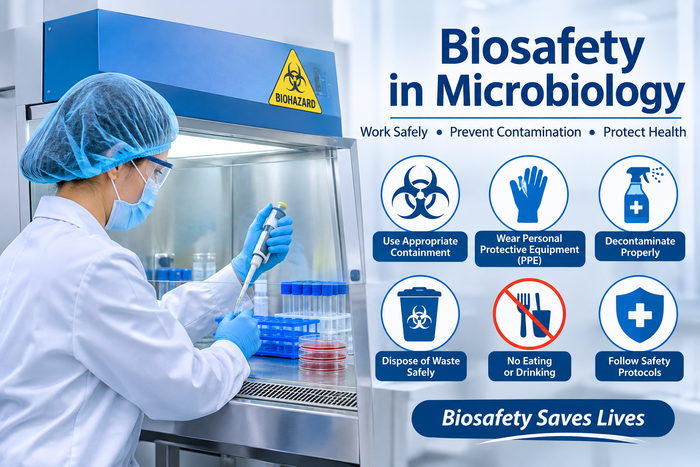
Biosafety in Microbiology is the system of practices, equipment, and facility controls used to protect laboratory workers, the community, and the environment from exposure to infectious or hazardous biological materials. Its two central pillars are risk assessment and containment.
Core principles
-
Risk assessment: Identify the agent, its route of transmission, infectious dose, procedures that may create aerosols or sharps injuries, and the training and health status of personnel.
-
Containment: Use safe microbiological practices, protective equipment, and laboratory design to prevent accidental exposure or release.
-
Exposure minimization: Avoid aerosols, use gloves, lab coats, eye/face protection when needed, never mouth-pipette, and wash hands after handling viable material.
-
Decontamination and waste management: Disinfect work surfaces, immediately clean spills, and decontaminate all materials that contacted viable organisms before disposal.
-
Emergency preparedness: Maintain spill, exposure, and medical-surveillance procedures; vaccination may be appropriate where available and indicated.
-
Biosafety levels
Microbiology laboratories are assigned Biosafety Levels (BSL) 1–4 based on the hazard posed by the agent and the work performed. Controls increase progressively from basic laboratory hygiene to full containment.
Level Typical agents / work Key controls BSL-1 Well-characterized microbes not known to consistently cause disease in healthy adults; basic teaching/research work Standard microbiological practices, handwashing, basic PPE, open bench work permitted BSL-2 Moderate-risk agents associated with human disease, such as many clinical bacteria and viruses Restricted access, biosafety cabinets for aerosol-generating work, gloves and lab coats, sharps precautions, decontamination BSL-3 Indigenous or exotic agents that can cause serious or potentially lethal disease via inhalation Directional airflow, controlled access, respiratory protection and specialized containment equipment BSL-4 Dangerous and exotic agents with high risk of life-threatening disease, often without reliable treatment or vaccine Maximum containment: dedicated suit laboratory or Class III cabinet laboratory, strict entry/exit procedures, specialized air and waste systems The CDC describes these four levels as the framework for matching containment measures to the risks of specific microbes and biological agents.