
Laboratory Fume Hood
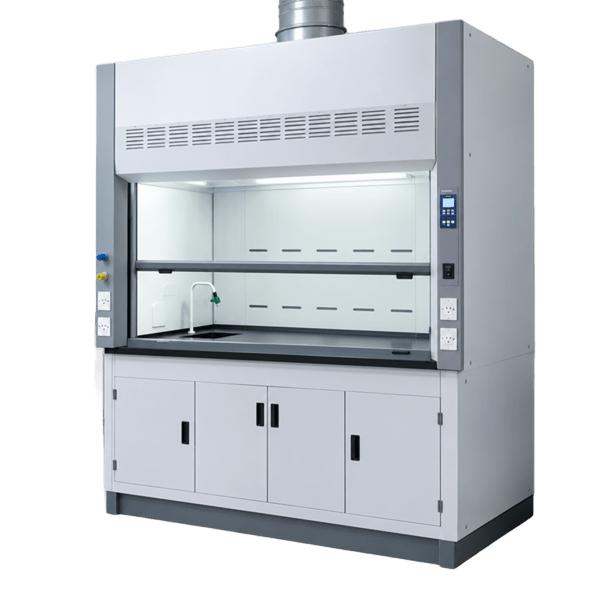
A Laboratory Fume Hood is a ventilated enclosure used to safely handle hazardous chemicals by capturing and exhausting harmful vapors, gases, fumes, and dusts away from the user and lab environment. It is a primary engineering control for chemical safety in research, quality-control, pharmaceutical, educational, and industrial laboratories.
How Laboratory Fume Hood works
Air is drawn from the laboratory through the open front—called the face—into the hood, passes across the work area, and exits through ductwork to the outside (ducted systems) or through filtration in ductless systems. The sliding glass panel, or sash, acts as a physical barrier and helps control airflow.
Main Types
| Type | How it exhausts air | Best suited for |
|---|---|---|
| Ducted fume hood | Contaminated air is ducted outside the building | Regular handling of toxic, corrosive, volatile, or flammable chemicals |
| Ductless / recirculating hood | Air passes through activated-carbon or HEPA-type filters and returns to the room | Lower-hazard applications where external ducting is impractical; filter selection must match the chemicals used |
| CAV hood | Exhausts a constant air volume regardless of sash position | Labs with stable ventilation requirements |
| VAV hood | Adjusts exhaust volume with sash height while maintaining face velocity | Energy-efficient laboratories with variable hood usage |
Common Applications
Fume hoods are used for solvent handling, acid digestion, sample preparation, chemical synthesis, staining, weighing odorous powders, and procedures involving volatile or toxic substances. They are especially important when working with flammables, corrosives, water-reactive chemicals, and pyrophoric materials.