
Fume Hood
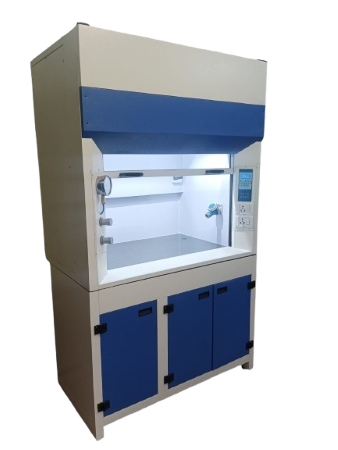
A Fume Hood is a ventilated laboratory enclosure designed to protect the user by capturing and exhausting hazardous vapors, gases, fumes, and dust generated during chemical work. It is one of the most common engineering controls for inhalation exposure in laboratories.
How it works
Air is drawn through the open front, passes over the work surface, and is pulled through rear baffles into ductwork; a roof-mounted exhaust fan then discharges it outside the building. The movable transparent sash acts as a physical barrier against splashes, aerosols, and minor fires while allowing hands and arms to work inside.
Main types
| Type | Air handling | Best use |
|---|---|---|
| Ducted fume hood | Exhausts contaminated air outside through ducting | General chemical work, solvents, acids, toxic vapors |
| Ductless / recirculating | Filters air and returns it to the room | Lower-hazard tasks where filter compatibility is confirmed |
| Standard-flow | Typically about 100 linear feet per minute at 18-inch sash height | Conventional laboratory applications |
| Low-flow / VAV | Reduces airflow when sash is lowered, saving energy | Energy-conscious labs with compatible operations. |