
Decontamination Air Shower
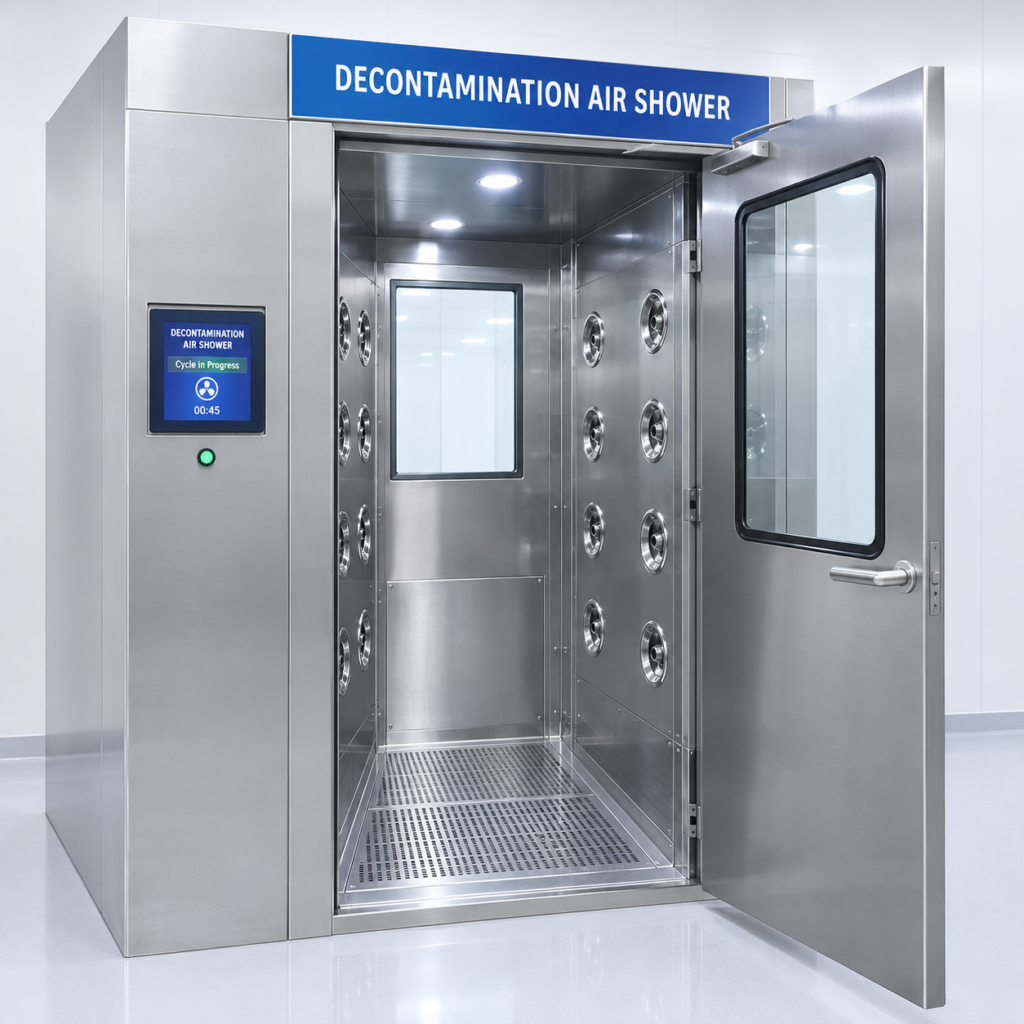
A Decontamination Air Shower is a specialized, self-contained entry chamber installed between a gowning area and a controlled environment (such as an ISO-classified cleanroom, biotechnology lab, pharmaceutical suite, or microelectronics facility).
Its primary purpose is to use high-velocity, HEPA-filtered air jets to dislodge and remove surface particulate matter, fibers, and dust from personnel or equipment before they enter a sterile zone.
How a Decontamination Air Shower Works
-
Entry & Interlocking: Personnel enter the chamber through the outer door. Once closed, an electronic interlocking system automatically locks both doors to prevent cross-contamination and pressure loss.
-
The Air Shower Cycle: High-pressure blowers force air through adjustable stainless steel nozzles at speeds ranging from 20 to 25 meters per second (m/s).
-
The “Scrubbing” Action: The high-velocity jets cause garments to flutter, creating a kinetic “scrubbing” effect that releases trapped dust, skin flakes, and microscopic particles. Occupants typically raise their arms and rotate in place to ensure 360-degree coverage.
-
Filtration: The dislodged particles are pulled through base grilles, passed through pre-filters (to capture coarse dust), and then forced through HEPA or ULPA filters (which trap 99.97% to 99.99% of particles down to 0.3 microns).
-
Exit: After a preset cycle (typically 15 to 30 seconds), the interior air clears, the inner door unlocks, and personnel step safely into the cleanroom.
-
Key Benefits
-
Protects Cleanroom Integrity: Significantly reduces the particulate load entering high-class sterile environments (like ISO Class 5 / Class 100 cleanrooms), preventing massive particle spikes.
-
Extends Filter Lifespan: By capturing 80–90% of surface contaminants at the door, it minimizes the dust load on ceiling-mounted Fan Filter Units (FFUs), lowering long-term maintenance costs.
-
Reinforces Compliance: The physical barrier and automated procedure remind staff of strict gowning and contamination protocols.
Common Configurations & Materials
-
Layouts: Available in 2-door straight, right-angle turns, 3-door T-sections, or extended tunnels for high-traffic shift changes.
-
Construction: Typically manufactured from durable Stainless Steel (SS304 / SS316) or powder-coated Zintec steel to withstand rigorous chemical washdowns and heavy daily use.
-